


Home >> About Majorca >> City of Palma de Mallorca
“May you dream of Palma de Mallorca…” these lines from Shufutinsky’s song are known to this day. Once upon a time, most people had no idea where this Palma de Mallorca was, and traveling outside of their home country was a luxury, so it could only be a dream. Now this beautiful island with its famous capital has become part of the annual vacation for millions of people.
Palma City is the 8th most populated city in Spain. As of 2019, 416,065 people are living in Capital of the Balearic Islands.
Palma de Mallorca has been recognized 2 times as the best city to live in the world. The capital of beautiful, sophisticated and charming Mallorca topped the list of best cities (British newspaper The Times, 2015 and 2020) using data collected on quality of life, climate, environment and ease of “assimilation”.
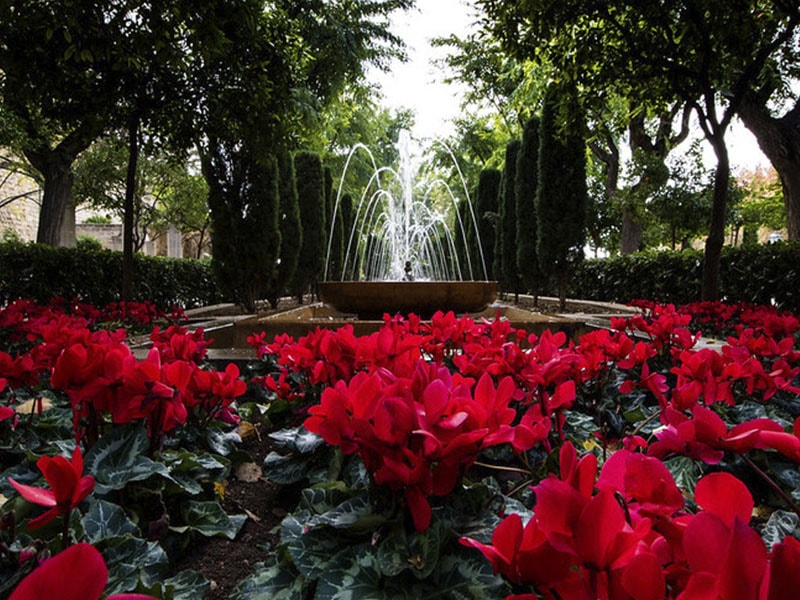
History of Palma de Mallorca
The prehistoric origin of Palma has not been confirmed archaeologically. The city of Palma was officially born under Roman rule in 123 BC. The area of this first city was located in the present-day neighborhood of Almudaina and was gradually consolidated and expanded.
The fifth through ninth centuries are little known. Historians consider them to be the Dark Ages. But it is reliably known and documented that it was during this period that the Jewish community arrived on the island and lived on the territory of Palma for the following centuries. And that after the Romans, Palma was dominated by the Vandals (455-534) and the Byzantines.
Changes befell the city of Palma in 902. At that time, the Balearic Islands were conquered by the Arabs, annexed to the Umayyad Emirate of Cordoba, and the city of Palma changed its name to Medina Mayurca.
Active changes began to take place. In the tenth century, a hydraulic system was built and Palma was supplied with fresh water from the de la Villa spring, located 6 kilometers from the city. The Almudaina Fortress, on the site of the present Almudaina Palace, and the Arab baths were also built.

Demographic growth began and the city of Palma began to expand beyond the Roman walls. At the beginning of the ninth century, a new city design was created (it is the current Old Town of Palma) and the expanded Medina Mayurca was surrounded by a new wall.
The year 1229 was a significant year for the history of Palma. On December 31, 1229, King Jaime I the Conqueror of Aragon arrived on the island. And from that time on, the Kingdom of Majorca was created. What we have now came from that period – religion, culture, language, customs. The town of Medina Mayurca became known as Mallorca (Arabic translation). The Arab mosque was demolished and in its place was erected La Seu Cathedral in honor of St. Mary. The architectural style of the city gradually changed and acquired a Gothic style, and the remnants of Arab art have almost disappeared.
In 1715, the Bourbon troops of King Philip V came to the present town of Palma. This is when the name Mallorca was changed to Palma. The civil institutions created by Jaime I the Conqueror were dissolved and the Palma City Council was created.
During the French War of 1804-1814, Mallorca became a refuge for many inhabitants from the surrounding peninsulas. The city of Palma was filled with people of different nationalities.

The beginning of tourism in Palma de Mallorca
In 1838, the first steamships started to sail on the Barcelona-Palma route. Mallorca began to receive travelers from abroad and from the Iberian Peninsula. In 1845, the first tourist guide to the city of Palma was published. In the second half of the nineteenth century, the Balearic Islands became known throughout Europe thanks to publications on the cultural, ethnographic and geographic features of the islands.
Travelers, artists, geographers were beckoned by a desire for adventure, an interest in exploring the world, culture and society of the island of Mallorca, different from those they knew.
The fifties of the twentieth century saw the beginning of the development of the tourist industry on the island of Mallorca and in particular Palma. Tourism became one of the main engines of the island.

Palma Attractions
Even a simple walk around the city of Palma will bring you a lot of pleasure. There is the Paseo Marítimo and the port, which is 4 kilometers long. Paseo del Born, which is surrounded by various stores and restaurants. Here, in the shade of tall trees with hacca-colored trunks, you can relax on stone benches, drink cold lemonade, and if you are lucky, watch the music and dance shows often held here in the summer. There is no doubt that Paseo del Born has its own special atmosphere.
From the architectural monuments of the city it is necessary to emphasize the Gothic Almudaina Palace с Muslim base, located side by side with the Palma Cathedral. The old town, with its narrow shady streets, and the royal gardens are also there. La Lonja, the stock exchange built in Gothic style between 1426-1448, is also worth seeing.
Be sure to visit church of St. Eulalia. The entrance to it is absolutely free, but the interior decoration, colorful stained glass windows and architecture, will leave a pleasant trace in your memory. The main architectural sights of Palma are concentrated close to each other.
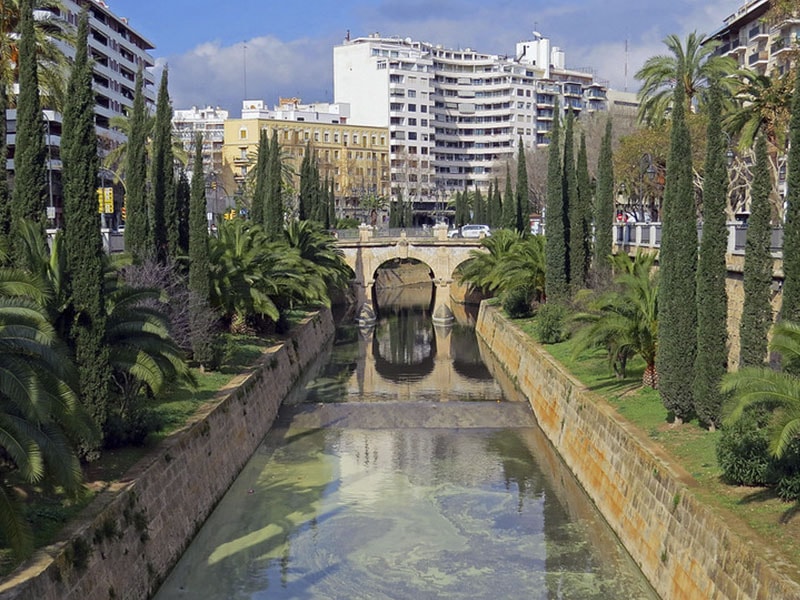
As a separate attraction in Palma de Mallorca tourists highlight the Mercat de l’Olivar market. It is a very atmospheric place, a market with a large selection of beautifully laid out all kinds of products and seafood.
Go to Mallorca and not try the traditional pastries? Blasphemy! The oldest bakery within walking distance of Palma’s main attractions, Horno Santo Cristo, is dedicated to baking traditional ensaimad since 1910. It is one of the most emblematic places in the city where you can taste authentic typical products of the island. Our favorite is ensaimada con cabello de angel (with pumpkin jam). We hope you will like it too.
But if you have the energy and desire, we also recommend stopping by the round, perfectly preserved Belver Castle. From its walls you can admire the beautiful panoramas of the city of Palma and the harbor. You can see the architecture of Spanish cities in the Spanish Village. This is an open-air museum that showcases examples of architecture from different Spanish provinces.
You can fit a visit to these Palma attractions into 1-2 days. Of course, the list of popular places does not end here. Many museums, exhibitions, restaurants are also worth a visit, but we will write about them separately. In the meantime, enjoy Palma if you are already in Mallorca or plan your vacation in this beautiful Mediterranean resort.


